Why People Don't Care About Robot Vacuum Cleaners Reviews
Robot Vacuum Cleaners Reviews
A robot vacuum can be a powerful tool to keep your home free from pet hair, dirt, and other dust particles which can trigger allergies. They need to be maintained regularly for them to work at their best.
Even the most elegant models can get stuck under furniture or door thresholds and may get caught in things like cords and shoelaces. So, to keep your robot vacuum working smoothly, you should consider these tips:
Object Detection
Robots can't climb stairs or reach narrow spaces, so a good set of sensors for detecting obstacles is essential. They help them avoid hitting objects and falling over them. Some robots have cliff sensors which bounce infrared light off walls and floor to measure the distance a drop will travel. If the robot is too close to a ledge or high threshold it will retreat and return to its base.
More advanced robots also use other sensors to identify objects like furniture legs and walls edges and allow them to navigate around them more precisely. They can then move up to the edge of the furniture piece or room and vacuum dirt that accumulates there for more thorough cleaning.
Selecting a robotic vacuum cleaner with an app allows you to include additional features. You can design maps of your house and set up exclusion zones and schedule cleaning times. Some have an built-in alarm that alerts you when it's time to change the filter or dust bin. These applications let you control many other functions, including changing the suction and letting the machine clean your carpets, floors or walls by adjusting the settings.
The most effective robots are able to recognize various items, like fine dust particles as well as screws made of steel. They are also able to recognize tangled pet hair and hair of dogs. They can pick up most wet messes too however they aren't capable of doing so as quickly as the manual vacuum cleaner.
As long as you regularly look for and remove tangled or stuck-on hair and debris from the trash bin after each cleaning session and clean down any cameras or sensors (and recharge ports, if applicable) between cleanings, your robot should last for many years. It is also recommended to clean the rotating brushes (ask your manufacturer for guidance on how to do this) and replace the parts as needed. Some manufacturers have received feedback from users who have used the same robot for more than 10 years.
Mapping
If your robot is eating up crumbs, picking up toys, or dodging every chair leg and stray sock that you have scattered across the floor, it must to be aware of where it is going so that it doesn't run into objects or fall down the stairs. That's why mapping technology in robot vacuum cleaners is a valuable piece of engineering.
The majority of robot vacuums begin cleaning immediately after they are switched on. However advanced models can show the entire home or room before starting to clean. You'll usually be able to see the map in an app that is accompanied by it and use it to help guide your robot more easily.
The robot will bounce infrared off the floor to make the map. It then uses that information to determine how close it is. This allows it to detect obstacles like walls, furniture or a sunken space. It will then back up or change direction if required to avoid crashing into them.
The cliff sensors on more advanced robots are designed to detect abrupt changes in the distance between the robot's base and the floor. This means that it's close to the edge, like the edge of a staircase. The robot will then reverse up to prevent falling.
In spite of all this however, it's impossible for a robot to "see" a staircase or ledge from its perspective. This is why obstacle-avoidance systems have become an integral feature of many robots to help them weave their way around shoes and toys as well as cords.
Many robots let you create your own exclusion zone by dragging virtual boundaries into the app. You can then mark where you do not want the robot to go. It's a great solution for those who live in a messy home and can't trust their robot to take care of things on its own. But, be aware that this kind of mapping takes lots of power, which can mean less runtime for the robot, and possibly lower performance in general.
Battery Life
While robots are far more advanced than traditional vacuum cleaners they still require a battery. Like any battery, the robot's battery will degrade over time. The life expectancy of a robot can be extended if you take proper care. This means charging the robot completely prior to every use and wiping it down with dry towels to avoid corrosion. It is also important to avoid exposing it to extreme temperatures and to use it less often.
It's important to note that battery life differs between models. Some models can clean an entire home on a single battery charge, while others can only be used to clean a small area or room. It's also important to consider whether the model has an charging dock or requires manual plug-ins between cleaning chores, as this can impact the time it takes to charge between runs.
A smaller size bin will fill more quickly. If you want an automatic emptying bin you should look for a bin with a minimum 400ml capacity.
Another way to conserve battery power is to set the robot up to clean high-traffic areas of your home more often than rooms that are not used such as scheduling a daily mowing schedule for your kitchen and mudroom while running the entire house every other day. Some robots also feature an energy-efficient cleaning mode which can help you save batteries for tasks that are routine.
Avoiding automated vacuum with a short warranty is another thing to be aware of. They are generally less reliable. Also, it's an excellent idea to register your vacuum with the manufacturer so that you can take advantage of its support and warranty services, which can help you troubleshoot any issues that might occur over time. Also, keep an eye out for discounts and sales on robot vacuums during the holiday season and other shopping events, as they can be an excellent opportunity to save money on a high-quality product.
Connectivity
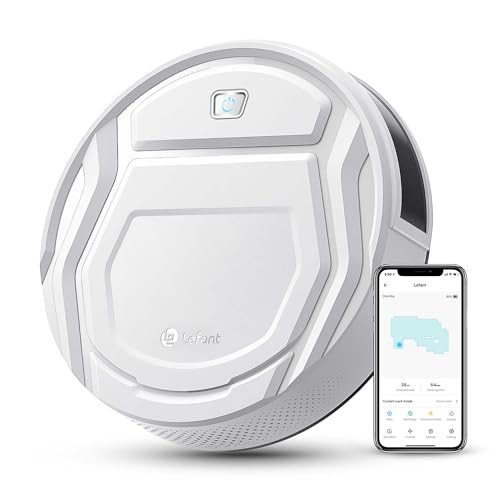
Robot vacuums can save time and energy by eliminating the need to clean floors. A growing number of models can mop floors. You don't have to worry about a bulky cord or hoses, and many can be controlled via a smartphone app (or even voice commands using smart speakers). Certain models allow you to create virtual barriers that they'll avoid; this works well for homes where there are lots of areas to keep off limits like playpens for kids or dog beds.
They move autonomously on a set of wheels, and scoop dirt into their suction areas or into a small filtered dustbin. They can be programmed to clean in accordance with an established schedule, or to return to the charging station when they are done.
Most robots come with a range of sensors that help them navigate and map their environments, including sensors for cliffs that warn them when they're close to stairs or living spaces that are sunken; they can also use lasers to detect walls and furniture. It is important to avoid obstacles, but they are not foolproof. Robots have been caught on socks or shoes or even tuck themselves into curtains with tassels.
It is also necessary to clean any sensors or cameras between cleaning sessions. A reliable application will give you updates and allow you to plan or alter the intensity of your robot's cleaning.
The iRoborock Q5 Max+ is one of the best robots we've tested, with excellent navigation and mapping across multiple surfaces. It was able to clean the entire surface of our test home in about an hour, and avoided all obstacles and didn't leave much dirt and dust in corners. While its mops couldn't pick up as much water-based debris as we'd like, it was still quite impressive overall. The app is simple to use and is compatible with Alexa or Google Assistant for hands free control. The app also lets you to create no-go zones as well as create customized maps of your home.