What's Holding Back From The Ultra Lightweight Self Propelled Wheelchair Industry?
Ultra Lightweight Self Propelled Wheelchair Ultra lightweight self propelled wheelchairs allow you to move with ease and confidence giving you freedom and autonomy. Ideal for all-day use they can help reduce stress both on the user and the caregiver. The key is to choose an ergonomic chair with seating elements that are able to meet the user's postural needs and are as light as possible. Comfort Our ultra-lightweight chairs are designed to offer the best comfort to users, reducing the strain on their bodies and caregivers. Features include movable footrests which can be folded down or swung out of the way to make it safer and easier transfers in and out of the chair. power assisted self propelled wheelchair is ergonomically designed to provide support and posture, while soft-touch fabric side panels offer a comfortable grip. There are also options to personalize the wheelchair with a choice of upholstery colors to match your personal style and character. A wheelchair is a vital mobility aid that will allow you to be more independent and continue to enjoy many of your favourite activities. It's crucial that you choose the right model to match your unique requirements. If you're unsure our team of experts on mobility are always available to help you navigate the choices. Wheelchairs are available in various sizes to meet your needs and are made of sturdy materials that will last for a long time. A basic wheelchair is suitable for people weighing up to 300 pounds. It gives you the option of self-propelled when your energy levels are high or driven by an attendant if they're low. The majority of standard wheelchairs come with two large rear wheels as well as four smaller front caster wheels that serve as steering wheels and for stability. These wheelchairs are hard to push and can cause stress for both the caregiver and the user. They are therefore best designed for short-term or travel use. Lightweight wheelchairs are built from lighter materials like aluminum, and are usually more maneuverable than their heavier counterparts, making them more comfortable to push for caregivers and users. They can also be folded up and transported in vehicles. This makes them a convenient option for travel or everyday use. The light weight of the frame of the wheelchair also makes it easier for users to move into and out of the chair, which is a common source of frustration for many. To make it easier to use there are features such as adjustable brake controls, simple seat height adjustment and an easy folding mechanism that allows the wheelchair to be collapsed in just seconds. Mobility Our Ultra lightweight wheelchair comes packed with features that make it easier to move and transport. Firstly the front wheels are raised by two stepper tubes that allow an individual to safely raise the tyres over obstructions or curbs. Long reach brakes on the rear tyres are easily activated by a driver or carer to reduce speed and facilitate stable parking. The solid Polyurethane (PU) 20cm (8”) front tyres are tough and low maintenance, providing ease of movement over a variety of surfaces. In our studies we discovered that the new ultra-lightweight, rigid frame provides superior performance in propulsion compared to folding frames wheelchairs when measured on concrete and carpet. The performance of a wheelchair can be affected by its components like the casters, tires and the surrounding. The environment of a wheelchair can cause vibrational forces, impact loads, and inertial torques when used that are not reflected in the current tests for wheelchair failure [1010. Real-world mobility is described as a series of short, slow stretches with frequent stops, turns and starts. This kind of mobility is usually not observed in current wheelchair failure testing, as it is not often done on the same ground at the same time. We instrumented a convenience sample of wheelchair users with a seat switch to measure their occupancy as well as an accelerometer to document their daily movements. The study found that the majority of participants walked 1.7 km on average every day, and rapid (>1 m/s) and long (>2 minutes) sessions of wheeling were rare. This finding shows the importance of paying attention to the ability to maneuver when prescribing and teaching wheelchairs. The results also revealed that a wheelchair can increase its overall efficiency by using lighter tires and frames however, further weight reductions will not improve the efficiency of its propulsion significantly. The reason is that weight can increase the metabolic cost because of frame flexion, vibration, and relative motions of loosely attached, removable parts such as footrests. Adding 5 kg to the frame mass does not significantly alter its energetic performance when measured against concrete. User-Friendliness The accessibility of an ultra-light self-propelled wheelchair is an important element in its appeal. Relying on others to drive you places is very restrictive for many wheelchair users and being able to go wherever you want and whenever you want is crucial to maintain your independence. Choosing a light manual chair will give you the ability to go shopping or visit friends without having someone else to drive you. This makes it possible to stay in touch with loved ones and also pursue your favourite hobbies and interests. One of the most significant factors that determines the ease with which you can push a wheelchair is the wheel size. Standard wheelchairs for adults have two large rear wheels, which are often 20 to 26 inches in size and are designed to provide propulsion, while the front casters are usually smaller and are mostly responsible for steering and stability. The smaller front casters are easier to push than the larger rear wheels since they require less force to move over the same distance. These benefits are accessible to those who select lightweight wheelchairs. They are more maneuverable and are able to be used in tight areas. This allows you navigate bridges and kerbs which would normally be difficult for regular wheelchairs. This lets you access areas of your home or community that were previously difficult to access, such as grassy or cobbled surfaces. You should also consider whether you intend to use the wheelchair on your own or with a companion. If you intend to be able to use the wheelchair for extended periods of time without assistance from an attendant, Spinlife recommends selecting a Basic or Lightweight Wheelchair. If you are going to depend on an attendant to help you, then we suggest you consider the features of our Heavy Duty or Transport Chair alternatives. Our ultra-lightweight self-propelled chairs can be folded down and easily disassembled, making them easier to store, transport or clean. They can be transported in the trunk of a car and are an excellent option for those who have to travel long distances as they can easily be rolled into hotels and restaurants. The footrests of these chairs can be flipped up or swung out of the way to facilitate safer movements into and out of the chair. 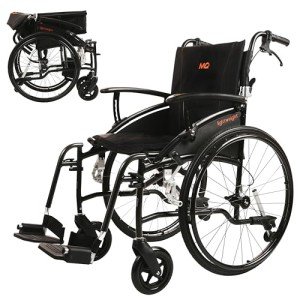 Customisation While most wheelchairs have standard features, there are a variety of options available to adapt them to each user's needs. Certain models come with removable footrests which can be folded or swung to make it easier and safer to move into and out of a wheelchair. There are also models that offer a variety of armrest and seat configurations, which help to lessen strain on shoulders. Another option is to look into wheelchairs with suspension. This is essential for those who spend a large portion of their day in the chair, since it can reduce the vibrations that travel through the frame and could cause discomfort. This can also make it more sturdy and able to handle various terrains. Wheelchairs with suspension can also help in reducing the effort required to propel them as they are more effective at transferring energy through the wheels and into forward motion. This reduces stress for both the person using the wheelchair and their caregiver especially when they have to push the chair for long distances or up steep slopes. Ultra-light and light weight manual wheelchairs are less expensive than their conventional counterparts, which means they are ideal for people who are on a tight budget. However, it's crucial to consult with a healthcare professional, as they will be able to recommend the best wheelchair for your needs. Ultralight, light and lightweight manual wheelchairs fall under the category of complex Rehab equipment, which means that they are usually recommended by an Healthcare Professional with ATP (Assistive Technology Practitioner) accreditation. They will be able evaluate your needs, suggest appropriate equipment, and provide all documents required to obtain the necessary funding approval for a brand new wheelchair. After your wheelchair is ordered and delivered, it can be brought to your home for you to start using straight away.